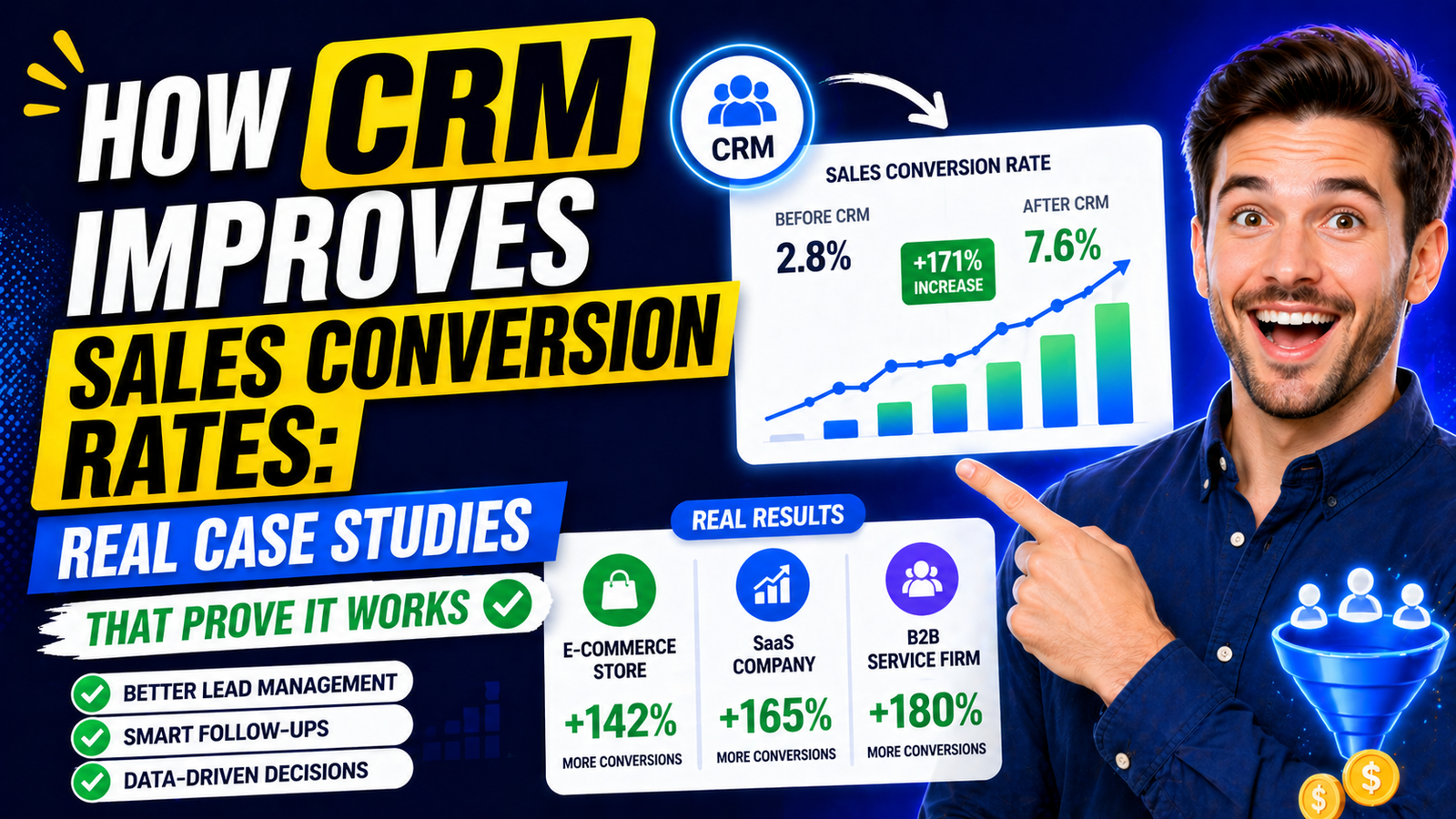
Discover how CRM improves sales conversion rates with real case studies. Learn practical strategies to boost leads, follow-ups, and revenue.
Table of Contents
Introduction
Every business wants more sales. That part is obvious. But what’s frustrating is not the lack of leads—it’s losing them somewhere along the process.
Maybe a follow-up was missed. Maybe a lead went cold. Or maybe your team simply didn’t have enough visibility into what was happening.
This is exactly where understanding how CRM improves sales conversion rates becomes a game changer. Instead of guessing what works, you start tracking, optimizing, and actually improving your results.
In this guide, we’ll look at real examples, practical strategies, and how businesses are using CRM systems to turn more leads into paying customers.
What Does It Mean When We Say CRM Improves Sales Conversion Rates?
Let’s keep it simple.
Conversion rate = the percentage of leads that turn into customers.
When you understand how CRM improves sales conversion rates, you’re essentially learning how better data, timing, and communication lead to more closed deals.
A CRM system—short for Customer Relationship Management—helps you manage every interaction with your prospects.
Instead of scattered information, everything lives in one place:
- Contact details
- Communication history
- Sales stage
- Follow-up reminders
That structure is what drives better conversions.
Why Businesses Struggle With Conversions Without CRM
Before we jump into case studies, it helps to understand the problem.
Without a CRM, businesses often face:
- Missed follow-ups
- Poor lead tracking
- Lack of personalization
- No clear sales pipeline
These issues directly impact how CRM improves sales conversion rates once implemented.
Real Case Studies: How CRM Improves Sales Conversion Rates
Let’s look at how this works in real-world scenarios.
Case Study 1: Small Marketing Agency Boosts Conversions by 40%
A growing agency was managing leads through spreadsheets and emails.
Problems:
- Leads slipping through the cracks
- No structured follow-up process
- Inconsistent communication
They switched to HubSpot CRM.
What changed:
- Automated follow-up emails
- Clear sales pipeline tracking
- Centralized client data
Result:
- 40% increase in conversions within 3 months
This is a classic example of how CRM improves sales conversion rates by simply organizing chaos.
Case Study 2: E-commerce Brand Improves Lead Response Time
An online business struggled with delayed responses to customer inquiries.
Challenges:
- Slow replies
- No lead prioritization
- Missed opportunities
After implementing Zoho CRM:
Improvements:
- Instant lead notifications
- Automated responses
- Lead scoring system
Result:
- Response time reduced by 60%
- Conversion rate significantly increased
Speed matters more than most businesses realize—and it’s a key factor in how CRM improves sales conversion rates.
Case Study 3: B2B Company Increases Deal Closures
A B2B service provider had a long sales cycle and poor visibility.
Issues:
- Unclear deal stages
- Poor communication between teams
- Lost follow-ups
They adopted Salesforce.
What improved:
- Detailed pipeline tracking
- Automated task reminders
- Better team collaboration
Result:
- 25% increase in deal closures
This highlights how CRM improves sales conversion rates through better coordination.
Key Ways CRM Improves Sales Conversion Rates
Now let’s break down the mechanisms behind these results.
1. Better Lead Management
A CRM ensures every lead is tracked properly.
No more:
- Forgotten contacts
- Duplicate entries
- Lost opportunities
This structured approach is central to how CRM improves sales conversion rates.
2. Automated Follow-Ups
Consistency is everything in sales.
CRM systems automate:
- Emails
- Reminders
- Notifications
This ensures no lead goes cold, reinforcing how CRM improves sales conversion rates.
3. Sales Pipeline Visibility
You can clearly see where each deal stands.
This helps:
- Identify bottlenecks
- Focus on high-priority leads
- Close deals faster
Pipeline clarity is one of the strongest reasons how CRM improves sales conversion rates.
4. Personalization at Scale
Customers respond better to personalized communication.
CRM tools store:
- Preferences
- Past interactions
- Purchase history
This data allows tailored messaging, which directly impacts how CRM improves sales conversion rates.
5. Data-Driven Decisions
Instead of guessing, you rely on real insights.
CRM reports show:
- Conversion trends
- Sales performance
- Customer behavior
This analytical edge explains how CRM improves sales conversion rates consistently.
Tools That Help Improve Conversions
Some CRM tools are particularly effective for boosting sales.
Popular Options:
- Pipedrive – Great for visual pipelines
- Freshsales – Strong automation features
- HubSpot CRM – Beginner-friendly
Each of these tools demonstrates how CRM improves sales conversion rates in different ways.
Common Mistakes That Hurt Conversion Rates
Even with a CRM, mistakes can happen.
Overloading the System
Too much data without structure creates confusion.
Ignoring Follow-Ups
Automation only works if set up properly.
Not Training the Team
A CRM is only as effective as its users.
Lack of Strategy
Tools alone don’t solve problems—you need a clear process.
Avoiding these mistakes ensures you fully benefit from how CRM improves sales conversion rates.
External Resources
- Learn more about CRM fundamentals: https://en.wikipedia.org/wiki/Customer_relationship_management
- Explore sales conversion concepts: https://en.wikipedia.org/wiki/Conversion_rate
Conclusion
At its core, sales is about timing, consistency, and understanding your customers. Without the right system, even great leads can slip away unnoticed.
That’s why businesses investing time into understanding how CRM improves sales conversion rates often see measurable growth. It’s not about working harder—it’s about working smarter with better tools and data.
If your current process feels scattered or unpredictable, implementing a CRM might be the shift that finally brings clarity—and better results.
FAQ Section
1. How does CRM improve sales conversion rates?
CRM improves conversions by organizing lead data, automating follow-ups, and providing insights that help sales teams close deals more effectively.
2. Can small businesses benefit from CRM systems?
Yes, small businesses can significantly improve lead management and conversions with the right CRM tool.
3. What features in CRM help increase conversions?
Key features include automation, lead scoring, pipeline tracking, and reporting.
4. How long does it take to see results from CRM?
Many businesses start seeing improvements within a few months of proper implementation.
5. Is CRM difficult to use?
Most modern CRM systems are user-friendly and offer tutorials and support.
6. Which CRM is best for improving sales conversions?
Popular options include HubSpot, Zoho CRM, and Salesforce, depending on your business size and needs.
