
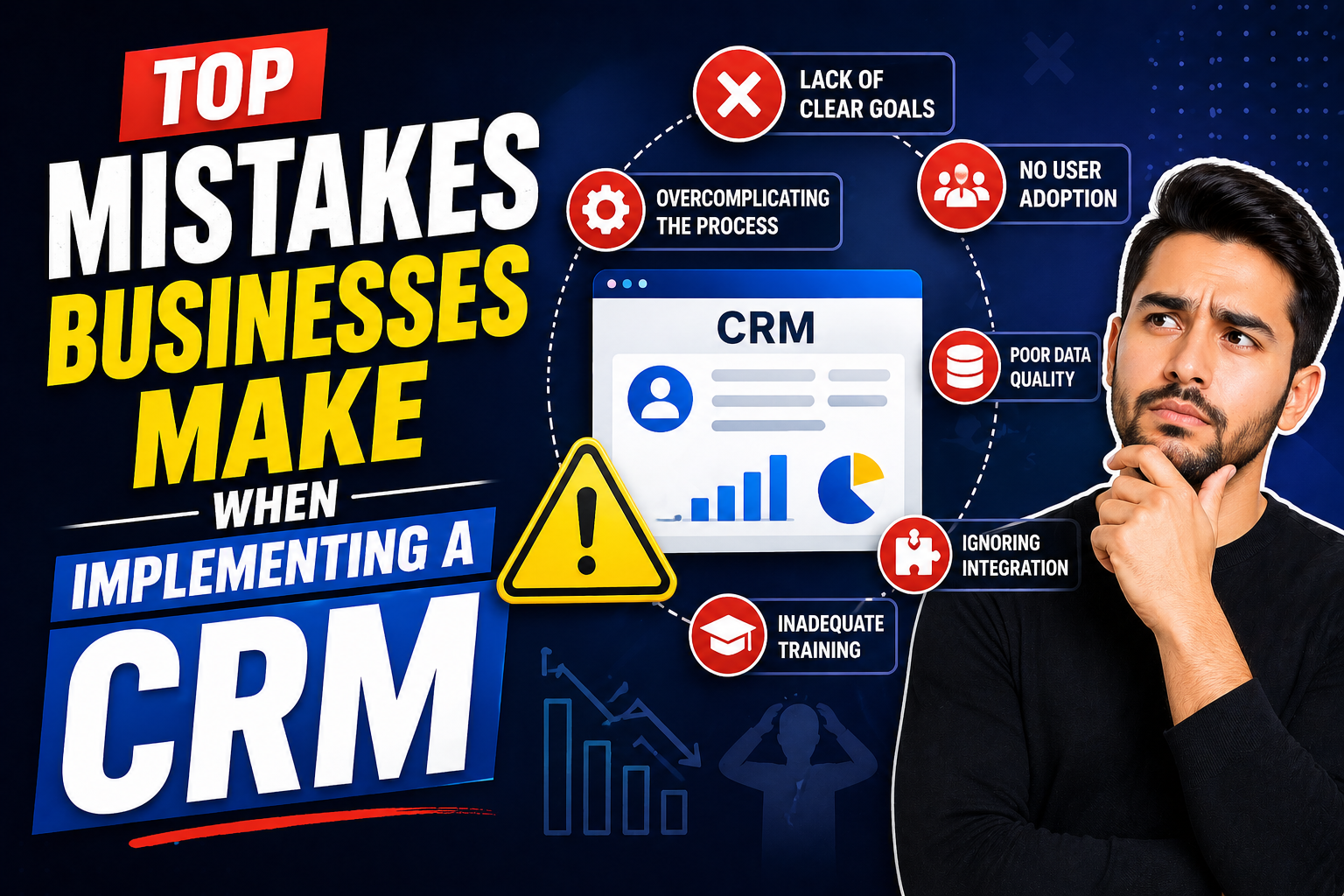
Top Mistakes Businesses Make When Implementing a CRM : Discover the most common CRM implementation mistakes businesses make and learn how to avoid costly errors for better results and growth.
Table of Contents
Introduction
Getting a CRM sounds like a smart move—and it usually is. But here’s the part many businesses don’t expect: buying a CRM is easy, making it work is not : Top Mistakes Businesses Make When Implementing a CRM
Plenty of teams invest in powerful tools, only to find them sitting unused or causing more confusion than clarity. That’s where understanding CRM implementation mistakes becomes crucial : Top Mistakes Businesses Make When Implementing a CRM
If you’re planning to adopt a CRM—or already have one that isn’t delivering results—this guide will help you spot what’s going wrong and fix it before it costs you time, money, and opportunities : Top Mistakes Businesses Make When Implementing a CRM
Why CRM Implementation Often Fails
A CRM system, built on Customer Relationship Management, is meant to simplify how businesses manage customer interactions : Top Mistakes Businesses Make When Implementing a CRM
But failure doesn’t usually come from the software itself : Top Mistakes Businesses Make When Implementing a CRM
It comes from how it’s implemented.
Common issues include: Top Mistakes Businesses Make When Implementing a CRM
- Lack of planning
- Poor data management
- Low team adoption
Recognizing these CRM implementation mistakes early can save you a lot of frustration.
Top CRM Implementation Mistakes to Avoid
Let’s break down the most common pitfalls businesses run into : Top Mistakes Businesses Make When Implementing a CRM
1. Not Defining Clear Goals
This is where things go wrong right from the start.
Many businesses adopt a CRM without knowing exactly what they want to achieve.
Are you trying to:
- Improve lead management?
- Increase sales conversions?
- Enhance customer relationships?
Without clear goals, it’s easy to fall into CRM implementation mistakes that lead to confusion and poor results.
2. Choosing the Wrong CRM
Not all CRMs are built the same.
Some are designed for large enterprises, while others work better for small teams.
Tools like Salesforce and HubSpot CRM offer different features and complexities.
Choosing the wrong platform is one of the most costly CRM implementation mistakes businesses make.
3. Ignoring User Experience
If your team finds the CRM difficult to use, they simply won’t use it.
That leads to: Top Mistakes Businesses Make When Implementing a CRM
- Incomplete data
- Missed updates
- Frustrated employees
A complicated interface is a silent contributor to CRM implementation mistakes.
4. Poor Data Quality
A CRM is only as good as the data inside it.
Common issues include: Top Mistakes Businesses Make When Implementing a CRM
- Duplicate entries
- Outdated information
- Missing details
Bad data leads to bad decisions. This is one of the most overlooked CRM implementation mistakes.
5. Lack of Team Training
You can’t expect your team to use a system they don’t understand.
Skipping training results in: Top Mistakes Businesses Make When Implementing a CRM
- Low adoption rates
- Incorrect usage
- Resistance to change
Proper onboarding reduces the risk of CRM implementation mistakes significantly.
6. Overcomplicating the Setup
It’s tempting to use every feature available.
But adding too many workflows, fields, and automations can make the system overwhelming.
Keeping things simple helps avoid unnecessary CRM implementation mistakes.
7. Not Integrating with Other Tools
A CRM works best when connected to your existing systems.
Without integration: Top Mistakes Businesses Make When Implementing a CRM
- Data becomes fragmented
- Processes remain manual
Learning about API can help you understand how tools connect.
Failing to integrate is a common CRM implementation mistake.
8. Ignoring Automation Opportunities
Many CRMs offer automation features—but they’re often underused.
Without automation: Top Mistakes Businesses Make When Implementing a CRM
- Tasks remain manual
- Productivity drops
Using automation correctly helps prevent CRM implementation mistakes related to inefficiency.
9. Lack of Ongoing Monitoring
Implementation doesn’t end after setup.
You need to : Top Mistakes Businesses Make When Implementing a CRM
- Track performance
- Identify issues
- Make improvements
Ignoring this step leads to long-term CRM implementation mistakes.
10. Expecting Instant Results
A CRM is not a magic solution.
It takes time to:
- Set up properly
- Train your team
- Optimize workflows
Unrealistic expectations often result in disappointment and perceived CRM implementation mistakes.
How to Avoid CRM Implementation Mistakes
Now that we’ve covered the problems, let’s focus on solutions.
Start with Clear Objectives
Define what success looks like before implementation.
Choose the Right Tool
Pick a CRM that matches your business size and needs.
Focus on Simplicity
Start with basic features and expand gradually.
Invest in Training
Make sure your team understands how to use the system effectively.
Maintain Data Quality
Regularly clean and update your data.
Monitor and Optimize
Continuously improve your processes.
Following these steps helps you avoid the most common CRM implementation mistakes.
Real-World Insight
Consider a small business that implemented a CRM without proper planning.
What Went Wrong:
- No clear goals
- Poor data entry
- No training
What They Fixed:
- Defined sales processes
- Cleaned up data
- Trained their team
The result? Better adoption, improved efficiency, and higher conversions.
This example highlights how avoiding CRM implementation mistakes can transform outcomes.
External Resources
- Learn more about CRM systems: https://en.wikipedia.org/wiki/Customer_relationship_management
- Understand software integration: https://en.wikipedia.org/wiki/API
Conclusion
Implementing a CRM should make your business more organized—not more complicated.
The truth is, most problems don’t come from the tool itself but from how it’s used. By understanding and avoiding common CRM implementation mistakes, you can turn your CRM into a powerful asset instead of a frustrating burden.
Take your time, plan carefully, and focus on what actually matters. A well-implemented CRM doesn’t just manage data—it supports growth in a way that feels natural and sustainable.
FAQ Section
1. What are common CRM implementation mistakes?
Common mistakes include poor planning, lack of training, bad data management, and choosing the wrong CRM.
2. Why do CRM implementations fail?
Failures usually happen due to lack of strategy, low user adoption, and improper setup.
3. How can I avoid CRM implementation mistakes?
Define clear goals, train your team, and keep the system simple and well-maintained.
4. How long does CRM implementation take?
It depends on the complexity, but basic setups can take a few weeks.
5. Is CRM suitable for small businesses?
Yes, many CRM tools are designed specifically for small and growing businesses.
6. Do I need technical knowledge to implement a CRM?
Not necessarily. Many modern CRMs are user-friendly, but some technical understanding can help.
