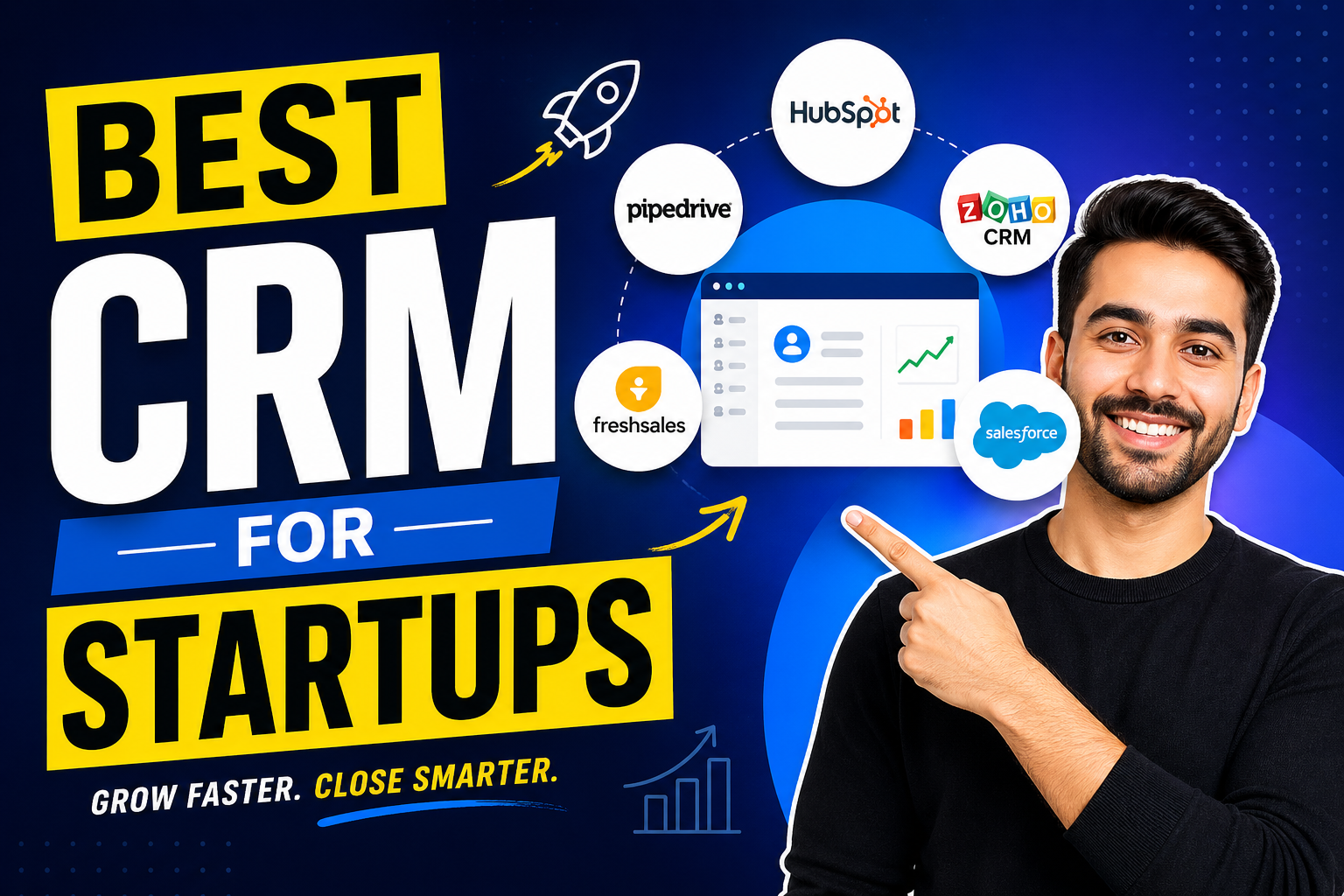
Discover the best CRM for startups with affordable pricing, powerful features, and scalability to support your business growth from day one.
Table of Contents
Introduction
Startups don’t have the luxury of wasting time—or money.
You’re juggling leads, customer conversations, follow-ups, and maybe even sales pipelines, all while trying to grow fast. At some point, spreadsheets stop working, and things start slipping through the cracks.
That’s where finding the best CRM for startups becomes crucial. The right tool doesn’t just organize your contacts—it helps you manage relationships, automate tasks, and scale without chaos.
Let’s explore the tools and strategies that actually make sense for startups, especially when budgets are tight but expectations are high.
Why Startups Need a CRM Early
It’s tempting to delay using a CRM until things get “bigger.” That’s usually a mistake.
A CRM, built on the idea of Customer Relationship Management, helps you centralize customer data and interactions from the start.
Without it:
- Leads get lost
- Follow-ups are inconsistent
- Growth becomes messy
Choosing the best CRM for startups early helps you build a solid foundation.
What Makes a CRM Ideal for Startups?
Not every CRM fits a startup’s needs. You need something practical, not overly complex.
Here’s what to look for in the best CRM for startups:
1. Affordable Pricing
Startups operate on tight budgets. Free plans or low-cost tiers are essential.
2. Ease of Use
You shouldn’t need weeks of training to get started.
3. Scalability
The CRM should grow with your business—not hold it back.
4. Automation Features
Basic automation can save hours every week.
5. Integration Capabilities
It should connect with tools like email platforms and messaging apps.
These factors define the best CRM for startups in real-world scenarios.
Top Affordable CRM Tools for Startups
Let’s look at some of the most practical options available.
1. HubSpot CRM
HubSpot is often the first choice for startups—and for good reason.
Why it works:
- Free plan with strong features
- Easy-to-use interface
- Built-in email tracking
For many founders, this is the best CRM for startups starting from zero.
2. Zoho CRM
Zoho offers flexibility and customization at a reasonable price.
Key features:
- Workflow automation
- Sales tracking
- Custom modules
It’s a strong contender for the best CRM for startups that need more control.
3. Freshsales
Freshsales strikes a balance between simplicity and functionality.
Highlights:
- Built-in communication tools
- Lead scoring
- Automation features
This makes it one of the practical choices for the best CRM for startups.
4. Pipedrive
Pipedrive focuses heavily on sales pipelines.
Why startups like it:
- Visual deal tracking
- Simple interface
- Sales-focused design
It’s often considered the best CRM for startups with strong sales goals.
5. Agile CRM
Agile CRM offers a mix of sales, marketing, and service tools.
Features include:
- Email marketing
- Contact management
- Automation
For all-in-one needs, it’s among the best CRM for startups on a budget.
How to Choose the Best CRM for Your Startup
With so many options, the decision can feel overwhelming.
Let’s simplify it.
Step 1: Define Your Needs
Ask yourself:
- Do you need sales tracking?
- Marketing automation?
- Customer support tools?
Your priorities will guide you toward the best CRM for startups.
Step 2: Start Small
Don’t overcomplicate things.
Choose a CRM that covers your basic needs and expand later.
Step 3: Test Free Versions
Most CRMs offer free trials or plans.
Use them to evaluate usability before committing.
Step 4: Focus on Growth Potential
Your CRM should scale as your business grows.
This is a critical factor when choosing the best CRM for startups.
Benefits of Using a CRM in a Startup
Once implemented, the impact becomes clear.
Better Organization
All customer data in one place.
Improved Follow-Ups
Never miss a lead again.
Increased Productivity
Automation reduces manual work.
Smarter Decision-Making
Data helps you understand what’s working.
These benefits highlight why investing in the best CRM for startups is worth it.
Common Mistakes Startups Make
Even with the right tool, mistakes can limit results.
Choosing Based Only on Price
Free doesn’t always mean effective.
Ignoring Training
Even simple tools need some learning.
Not Using Automation
Manual work slows growth.
Overloading Features
Too many features can create confusion.
Avoiding these mistakes helps you maximize the best CRM for startups.
External Resources
- Learn more about CRM systems: https://en.wikipedia.org/wiki/Customer_relationship_management
- Explore startup growth strategies: https://en.wikipedia.org/wiki/Startup_company
Conclusion
Finding the best CRM for startups isn’t about picking the most advanced tool—it’s about choosing something that fits your current stage while supporting future growth.
Start simple. Focus on usability. Make sure it aligns with how your team works.
As your startup grows, your CRM should grow with you—quietly supporting your processes, keeping things organized, and helping you build stronger customer relationships.
That’s when you know you’ve chosen the right one.
FAQ Section
1. What is the best CRM for startups?
Popular options include HubSpot, Zoho CRM, and Freshsales due to affordability and scalability.
2. Are there free CRM tools for startups?
Yes, many platforms offer free plans with essential features for small teams.
3. Why do startups need a CRM?
A CRM helps manage leads, track interactions, and improve customer relationships.
4. Can a CRM scale with a growing startup?
Yes, most modern CRMs offer scalable plans and features.
5. How long does it take to set up a CRM?
Basic setup can take a few hours, depending on the tool and requirements.
6. Is CRM necessary for early-stage startups?
While not mandatory, it significantly improves organization and growth potential.
