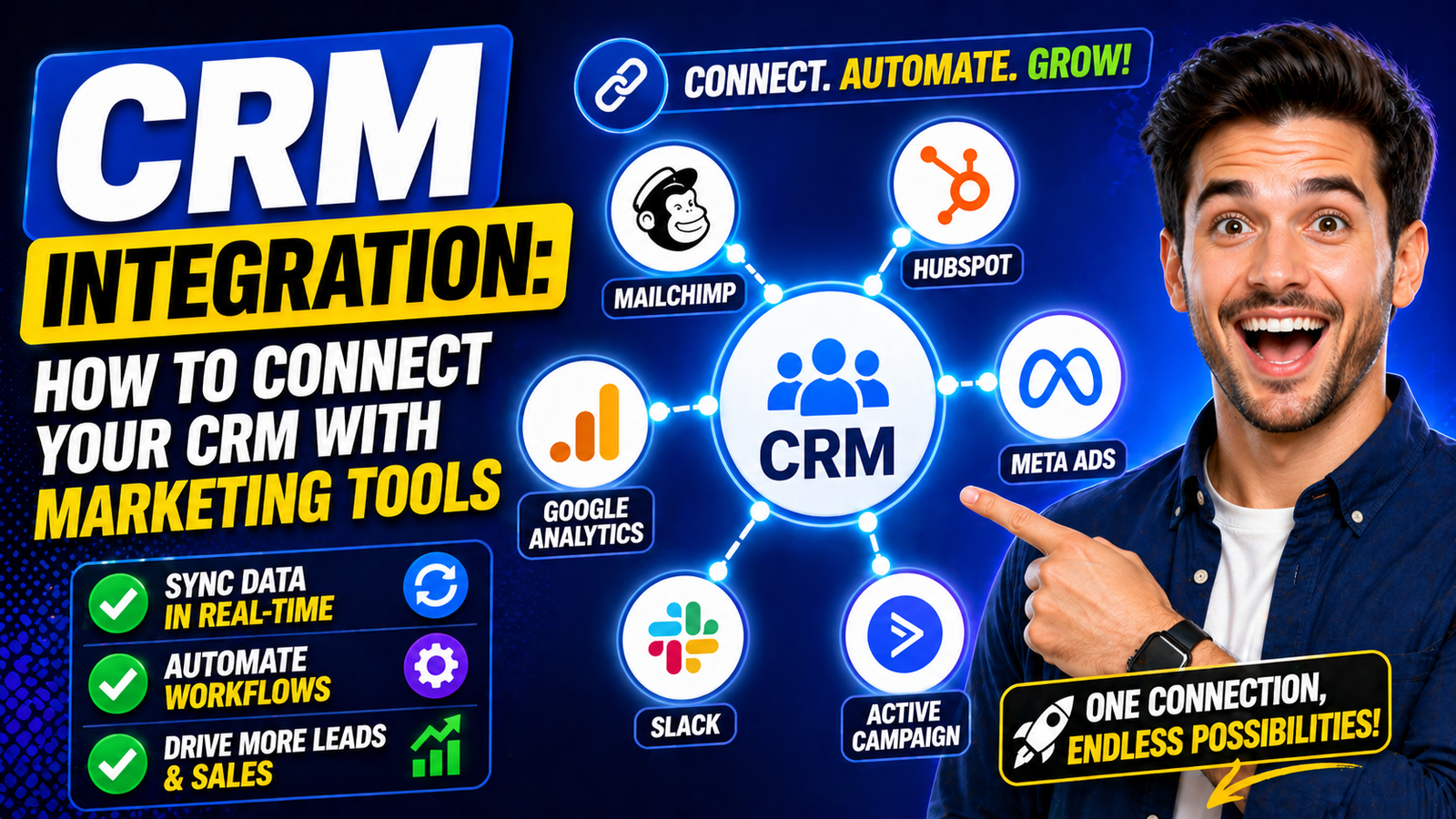
Learn CRM integration and how to connect your CRM with marketing tools to automate workflows, improve leads, and boost conversions.
Table of Contents
Introduction
If your marketing and sales tools aren’t talking to each other, you’re probably wasting time—and missing opportunities.
Leads come in from one platform, emails go out from another, and somewhere in between, data gets lost or duplicated. It’s frustrating, and more importantly, it slows down growth.
That’s where understanding CRM integration becomes essential. When done right, it connects your CRM with marketing tools so everything works together smoothly—no manual work, no confusion.
In this guide, we’ll break down CRM integration in a practical way, so you can actually implement it without feeling overwhelmed.
What Is CRM Integration?
Let’s keep it simple.
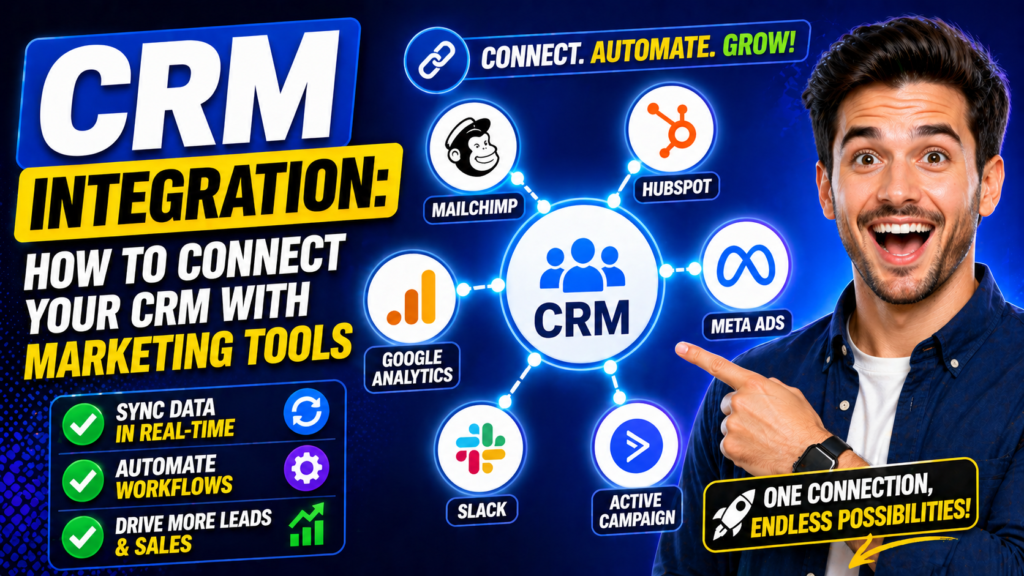
is the process of connecting your CRM system with other tools—especially marketing platforms—so data flows automatically between them.
Instead of manually updating information, everything syncs in real time.
A CRM system, based on Customer Relationship Management, becomes your central hub for customer data.
With proper :
- Capture leads automatically
- Sync email campaigns
- Track customer behavior
- Align sales and marketing teams
Why CRM Integration Matters for Marketing
Marketing without integration feels like working in silos.
Here’s what happens without
- Leads don’t reach sales teams on time
- Campaign data stays isolated
- Customer journeys feel disconnected
When you implement CRM integration, everything changes.
Key Benefits
- Better Lead Management
Leads move instantly from marketing tools into your CRM - Improved Personalization
Campaigns are based on real customer data - Automation of Workflows
No more manual data entry - Higher Conversion Rates
Faster follow-ups and smarter targeting
These benefits show why CRM integration is not just a technical upgrade—it’s a business advantage.
Popular Marketing Tools You Can Integrate with CRM
Most modern CRMs connect easily with popular platforms.
Here are some common integrations:
Email Marketing Platforms
- Mailchimp
- ActiveCampaign
Advertising Platforms
- Google Ads
- Facebook Ads
Social Media Tools
- Scheduling and analytics platforms
Analytics Tools
- Website tracking and reporting systems
How CRM Integration Works (Step-by-Step)
Let’s break this down into a simple process.
Step 1: Choose the Right CRM
Not all CRMs offer the same integration capabilities.
Popular options include:
- HubSpot CRM
- Zoho CRM
Step 2: Identify Your Marketing Stack
List all the tools you currently use:
- Email marketing
- Ads platforms
- Analytics tools
Step 3: Use Native Integrations or APIs
Most CRMs offer built-in integrations.
If not, you can use APIs (learn more here: https://en.wikipedia.org/wiki/API).
Step 4: Map Your Data
Decide how data should flow.
For example:
- Leads from forms → CRM contacts
- Email activity → customer profiles
Step 5: Test Everything
Before going live:
- Check data syncing
- Test workflows
- Verify automation
Real-World Example of CRM Integration
Let’s say you run an online business.
Here’s how CRM integration might look:
- A visitor fills out a form on your website
- Their data goes directly into your CRM
- An automated email is sent instantly
- The sales team gets notified
- Follow-ups are scheduled automatically
No manual work. No delays.
Common Challenges (And How to Fix Them)
Integration sounds great—but it’s not always smooth.
Data Duplication
Problem: Same contact appears multiple times
Solution: Use data validation and deduplication tools
Sync Errors
Problem: Data doesn’t update properly
Solution: Regularly monitor integrations
Overcomplicated Setup
Problem: Too many tools connected at once
Solution: Start simple and scale gradually
Lack of Strategy
Problem: Integration without clear goals
Solution: Define objectives before implementation
Best Practices for Successful CRM Integration
To get the most out of your setup, follow these tips:
Keep It Simple
Start with essential integrations first.
Focus on Data Quality
Clean, accurate data is critical.
Train Your Team
Make sure everyone understands how the system works.
Monitor Performance
Track results and optimize regularly.
External Resources
- Learn more about CRM systems: https://en.wikipedia.org/wiki/Customer_relationship_management
- Understand APIs and integrations: https://en.wikipedia.org/wiki/API
Conclusion
When your marketing platforms and CRM are connected, everything becomes smoother—data flows automatically, teams stay aligned, and customers get a better experience.
You don’t need to integrate everything at once. Start small, connect what matters most, and build from there.
