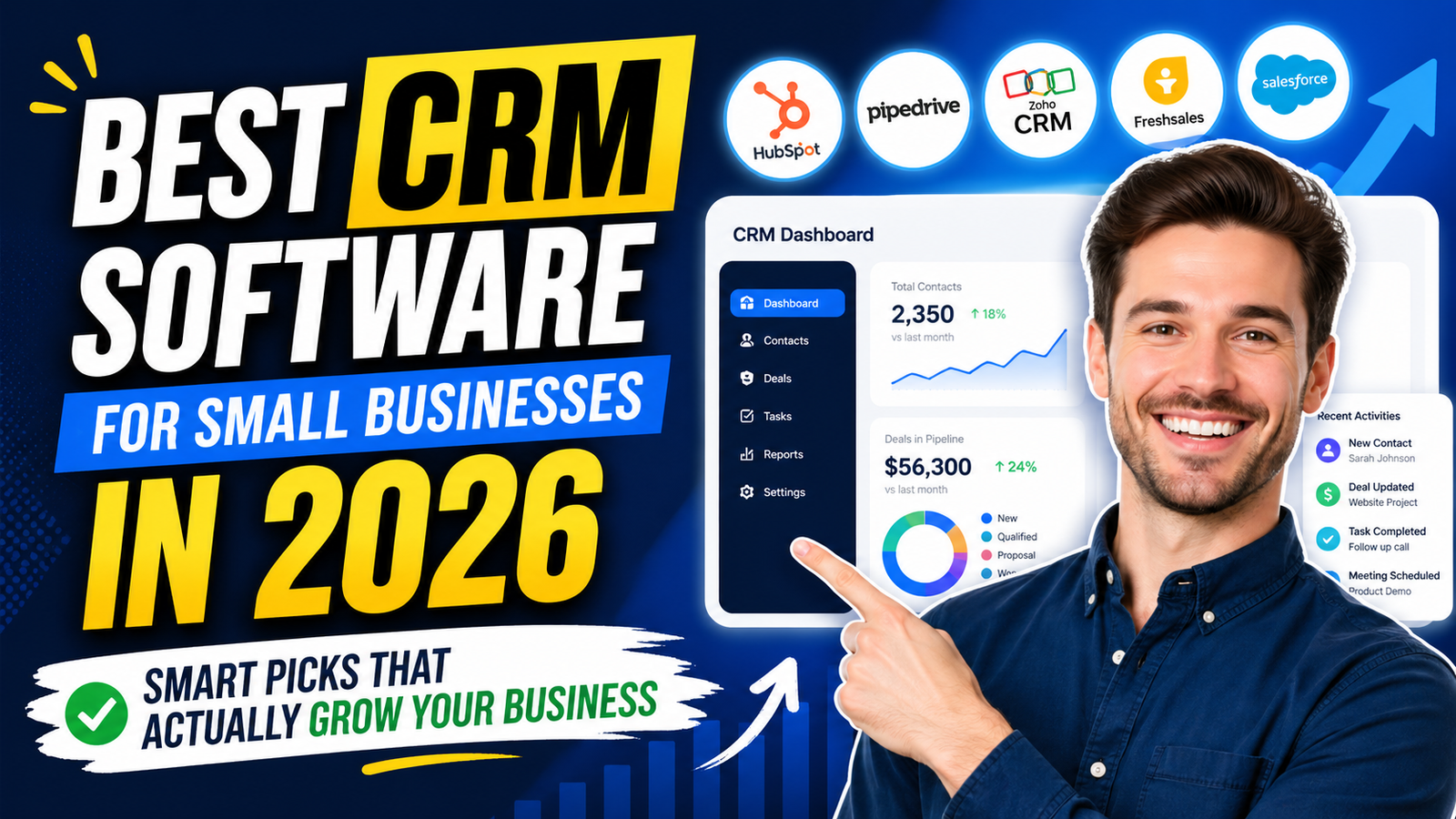
Discover the best CRM software for small businesses in 2026. Compare features, pricing, and tools to boost sales and customer relationships.
Table of Contents
Introduction
Running a small business often feels like juggling ten things at once—sales, customer support, marketing, and everything in between. Somewhere in that chaos, leads slip through the cracks, follow-ups get delayed, and opportunities quietly disappear.
That’s exactly where the best CRM software for small businesses in 2026 comes into play. A good CRM doesn’t just organize contacts—it helps you understand customers, automate tasks, and close more deals without burning out.
But here’s the catch: not every CRM is built with small businesses in mind. Some are too complex, others too expensive, and a few simply don’t deliver on their promises. Let’s break it down in a practical, no-fluff way so you can find what actually works.
What Makes the Best CRM Software for Small Businesses in 2026?
Before jumping into tools, it helps to know what separates a decent CRM from a great one.
A modern CRM system should offer:
- Easy setup and user-friendly interface
- Affordable pricing with scalable plans
- Automation for repetitive tasks
- Strong integration capabilities
- Mobile accessibility
- Data security and compliance
If you’re curious about the core concept, here’s a helpful explanation of Customer Relationship Management that breaks it down further.
The best CRM software for small businesses in 2026 isn’t necessarily the one with the most features—it’s the one your team will actually use daily.
Top Picks: Best CRM Software for Small Businesses in 2026
Let’s get into the tools that are making a real impact this year.
1. HubSpot CRM
If you’re starting out, HubSpot is often the first name people recommend—and for good reason.
Why it works:
- Free plan with generous features
- Built-in email marketing tools
- Easy pipeline management
This is one of the best CRM software for small businesses in 2026 if you want something powerful without upfront costs.
2. Zoho CRM
Zoho is known for flexibility. It’s ideal if your business has slightly more complex workflows.
Highlights:
- AI-powered insights
- Custom dashboards
- Affordable paid plans
For businesses scaling steadily, it’s often considered among the best CRM software for small businesses in 2026.
3. Salesforce Essentials
Salesforce might sound “enterprise-level,” but its Essentials plan targets smaller teams.
What stands out:
- Advanced reporting
- Strong automation
- Industry-specific customization
If you want long-term scalability, this is one of the best CRM software for small businesses in 2026 to grow into.
4. Pipedrive
Pipedrive is built for sales teams who want clarity and speed.
Key features:
- Visual sales pipelines
- Activity reminders
- Deal tracking
This makes it one of the best CRM software for small businesses in 2026 focused purely on closing deals.
5. Freshsales
Freshsales strikes a balance between usability and advanced features.
Why people like it:
- Built-in calling and email
- AI-based lead scoring
- Clean interface
It’s quickly earning a spot among the best CRM software for small businesses in 2026, especially for service-based businesses.
How to Choose the Right CRM for Your Business
Picking a CRM isn’t about going with the most popular option—it’s about fit.
Here’s a simple way to decide:
Step 1: Identify Your Needs
Are you focused on:
- Lead generation?
- Sales tracking?
- Customer support?
Different CRMs excel in different areas.
Step 2: Consider Budget vs Value
Free tools are great, but paid CRMs often unlock:
- Better automation
- Deeper analytics
- More integrations
The best CRM software for small businesses in 2026 will offer clear value for every rupee you spend.
Step 3: Check Integrations
Your CRM should connect with tools like:
- Email marketing platforms
- Accounting software
- E-commerce systems
For example, integration with Mailchimp can streamline your campaigns.
Step 4: Test Before You Commit
Most platforms offer free trials. Use them.
Spend a few days actually using the system. That’s the fastest way to know if it’s right.
Key Benefits of Using CRM Software
Still wondering if it’s worth the investment? Here’s what you gain:
Better Customer Insights
Track behavior, preferences, and interactions in one place.
Improved Sales Performance
Sales pipelines become visible and manageable.
Automation Saves Time
Follow-ups, reminders, and emails can run automatically.
Stronger Customer Retention
When you know your customers better, you serve them better.
The best CRM software for small businesses in 2026 turns scattered data into actionable insights.
Common Mistakes to Avoid
Even the best CRM won’t help if used incorrectly.
Overcomplicating Setup
Start simple. Add complexity later.
Not Training Your Team
A CRM is only useful if everyone uses it properly.
Ignoring Data Quality
Bad data leads to bad decisions.
Choosing Based on Price Alone
Cheap tools can cost more in lost opportunities.
Avoid these mistakes, and the best CRM software for small businesses in 2026 will deliver real results.
CRM Trends to Watch in 2026
The CRM space is evolving quickly.
AI-Powered Automation
More tools are using AI to predict customer behavior and suggest actions.
Mobile-First CRM
Business owners want access on the go.
Deeper Personalization
Customers expect tailored experiences, not generic messages.
Integration with Multiple Platforms
CRMs are becoming central hubs for all business operations.
These trends are shaping the best CRM software for small businesses in 2026, making them smarter and more intuitive.
External Resources
- Learn more about CRM fundamentals on Wikipedia
- Explore detailed CRM comparisons via https://en.wikipedia.org/wiki/Customer_relationship_management
Conclusion
Choosing the best CRM software for small businesses in 2026 isn’t about chasing trends—it’s about solving real problems in your daily workflow.
Start with your needs, test a couple of tools, and focus on usability over complexity. The right CRM will quietly transform how you manage customers, track sales, and grow your business.
And once you find the one that clicks, you’ll wonder how you ever managed without it.
FAQ Section
1. What is the best CRM software for small businesses in 2026?
The best CRM depends on your needs, but popular options include HubSpot, Zoho CRM, and Pipedrive due to their affordability and ease of use.
2. Is free CRM software enough for small businesses?
Yes, many small businesses start with free CRMs. However, upgrading unlocks automation, analytics, and integrations that improve efficiency.
3. How much does CRM software cost?
Prices vary widely—from free plans to $10–$50 per user per month for most small business tools.
4. Can CRM software increase sales?
Absolutely. A CRM helps track leads, automate follow-ups, and identify high-value opportunities, leading to better conversions.
5. How long does it take to implement a CRM?
Basic setup can take a few hours, while full customization may take a few weeks depending on complexity.
6. Do small businesses really need a CRM?
If you handle multiple customers or leads, a CRM quickly becomes essential for staying organized and scaling efficiently.
