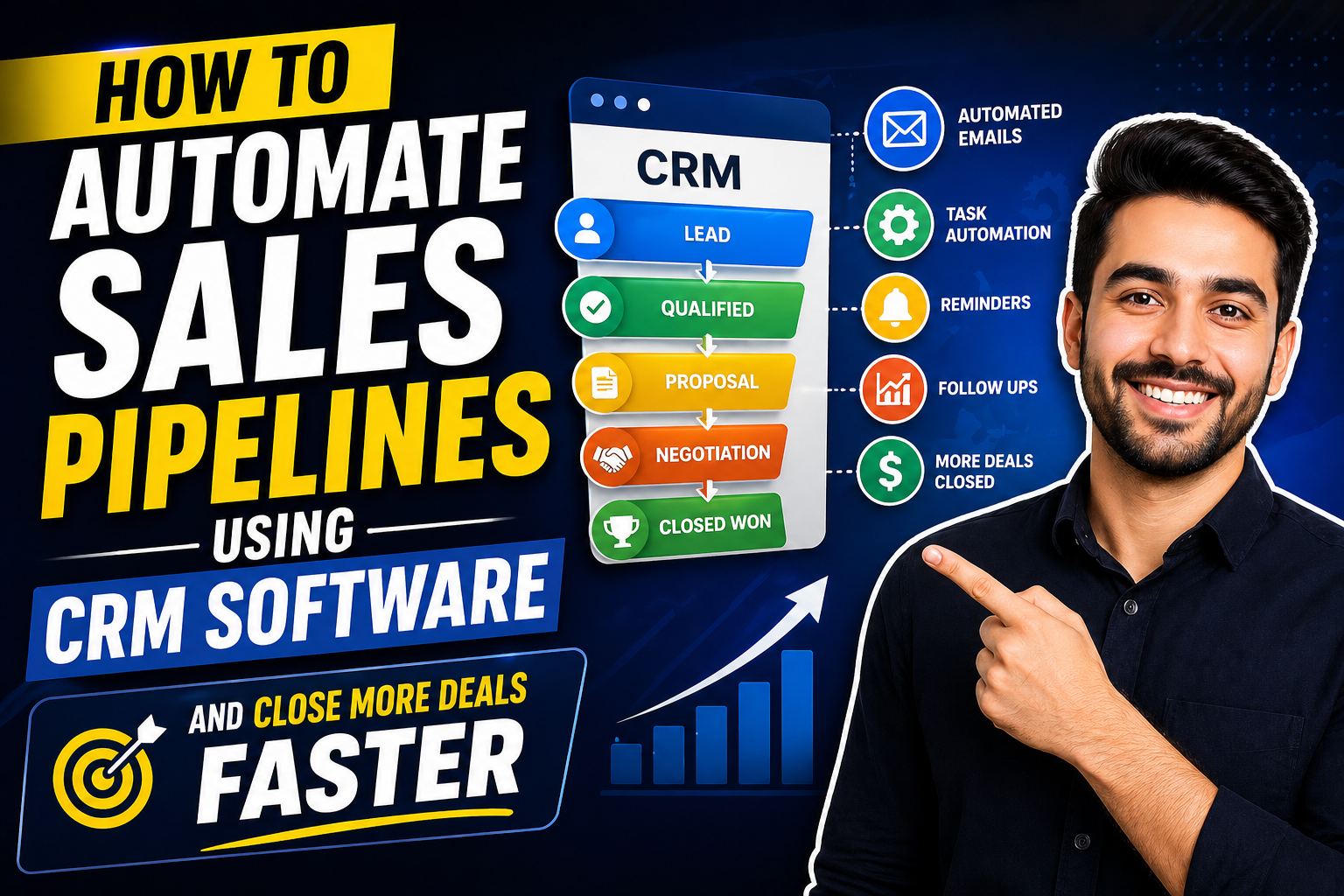
Learn how to automate sales pipelines using CRM software to save time, improve lead management, and boost conversions effortlessly.
Table of Contents
Introduction
Sales pipelines can get messy fast.
One minute you’re tracking a few leads manually, and the next, you’re juggling dozens of conversations, follow-ups, and deal stages. Somewhere in that chaos, opportunities slip through the cracks—and that’s frustrating.
That’s exactly why more businesses are learning how to automate sales pipelines using CRM software. It’s not about replacing effort; it’s about removing repetitive work so you can focus on actually closing deals.
If you’ve ever felt like your sales process is harder than it should be, this guide will help you simplify it in a practical, no-nonsense way.
What Does It Mean to Automate a Sales Pipeline?
Let’s break it down : How to Automate Sales Pipelines Using CRM Software
A sales pipeline is simply the journey a lead takes—from first contact to final deal. A CRM system, built on Customer Relationship Management, helps track that journey.
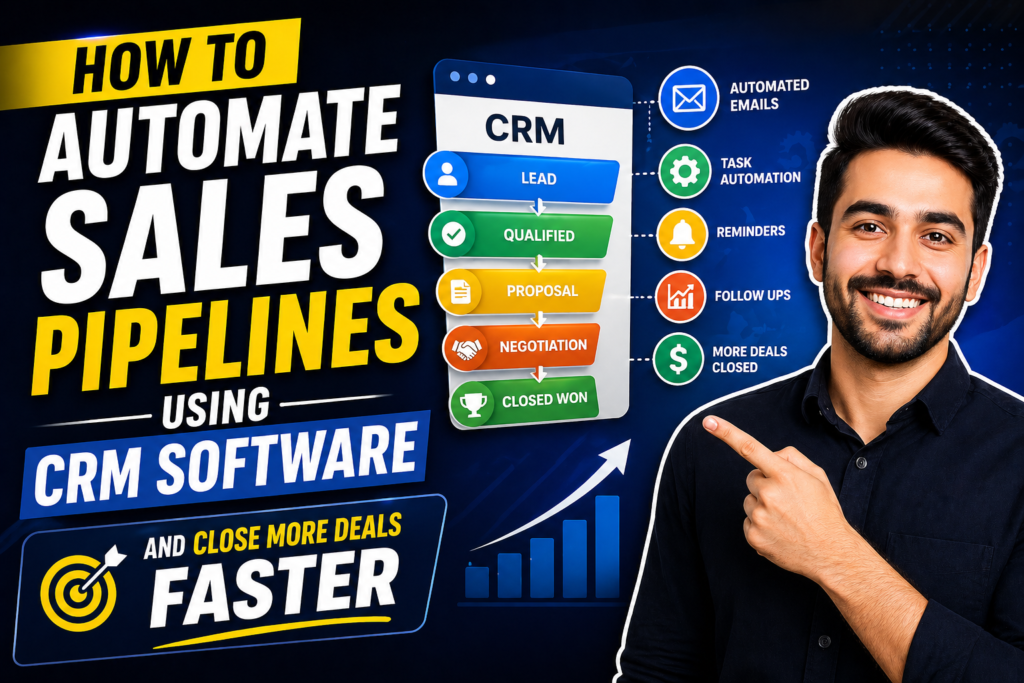
When you automate sales pipelines using CRM software, you’re allowing the system to handle repetitive tasks like: How to Automate Sales Pipelines Using CRM Software
- Assigning leads
- Sending follow-up emails
- Updating deal stages
- Scheduling reminders
Instead of doing everything manually, the system works in the background.
Why Automation Matters in Sales
Manual processes slow things down. Worse, they create inconsistency.
Here’s what typically happens without automation: How to Automate Sales Pipelines Using CRM Software
- Leads don’t get timely responses
- Follow-ups are forgotten
- Data is incomplete or outdated
When you automate sales pipelines using CRM software, you create a structured and reliable system.
Key Benefits:
- Faster response times
- Consistent follow-ups
- Better lead tracking
- Higher conversion rates
Automation isn’t about doing less—it’s about doing things better : How to Automate Sales Pipelines Using CRM Software
Key Features That Enable Sales Automation
Not all CRMs are built the same. You need specific features to make automation work effectively.
Workflow Automation
This allows you to create rules like: How to Automate Sales Pipelines Using CRM Software
- “If a new lead is added, assign it to a sales rep”
- “If a deal reaches stage X, send a follow-up email”
This is the backbone when you automate sales pipelines using CRM software.
Lead Scoring
Automatically rank leads based on their behavior and engagement.
This helps your team focus on high-priority prospects.
Email Automation
Send personalized emails without manual effort.
Tools like Mailchimp often integrate with CRMs for this purpose.
Task Automation
Set reminders and tasks automatically based on pipeline activity.
Integration Capabilities
Connect your CRM with other tools like marketing platforms and analytics systems.
These features make it easier to automate sales pipelines using CRM software effectively.
Step-by-Step: How to Automate Sales Pipelines Using CRM Software
Let’s walk through a simple, practical process : How to Automate Sales Pipelines Using CRM Software
Step 1: Map Your Sales Process
Before automation, you need clarity.
Define your pipeline stages, such as:
- Lead generation
- Initial contact
- Qualification
- Proposal
- Closing
Understanding this flow is essential to automate sales pipelines using CRM software properly.
Step 2: Choose the Right CRM
Your CRM should support automation features.
Popular options include: How to Automate Sales Pipelines Using CRM Software
- HubSpot CRM
- Pipedrive
The right tool makes it easier to automate sales pipelines using CRM software without complications.
Step 3: Set Up Automation Rules
Create workflows based on your sales process.
Examples:
- Assign leads automatically
- Trigger emails after form submissions
- Move deals to the next stage based on actions
This is where automation starts working for you.
Step 4: Automate Follow-Ups
Follow-ups are often where deals are won or lost.
Set up:
- Email sequences
- Reminder notifications
- Scheduled calls
Consistent follow-ups are a major advantage when you automate sales pipelines using CRM software.
Step 5: Monitor and Optimize
Automation isn’t “set it and forget it.”
Track performance:
- Conversion rates
- Response times
- Deal progression
Adjust workflows as needed to improve results.
Real-World Example
Imagine a small business handling 100 leads per week.
Without Automation:
- Leads assigned manually
- Follow-ups inconsistent
- Data scattered
With Automation:
- Leads assigned instantly
- Emails sent automatically
- Pipeline updated in real time
The difference is clear. This is the practical impact when you automate sales pipelines using CRM software.
Common Mistakes to Avoid
Automation can backfire if done poorly.
Over-Automating
Too many automated messages can feel impersonal.
Ignoring Data Quality
Automation depends on accurate data.
Poor Workflow Design
Complicated workflows can create confusion.
Lack of Testing
Always test before going live.
Avoiding these mistakes ensures you successfully automate sales pipelines using CRM software.
Best Practices for Effective Automation
To get the most out of your setup, keep things practical.
Keep It Simple
Start with basic workflows and expand later.
Focus on Personalization
Use customer data to tailor communication.
Train Your Team
Make sure everyone understands how the system works.
Review Regularly
Monitor performance and make improvements.
These practices help you fully benefit when you automate sales pipelines using CRM software.
External Resources
- Learn more about CRM systems: https://en.wikipedia.org/wiki/Customer_relationship_management
- Understand sales pipelines: https://en.wikipedia.org/wiki/Sales_process
Conclusion
Learning how to automate sales pipelines using CRM software isn’t about adding complexity—it’s about removing friction.
When your system handles repetitive tasks, your team can focus on what really matters: building relationships and closing deals.
Start small. Automate one part of your pipeline, test it, and improve it. Over time, these small changes will transform your entire sales process.
And once everything runs smoothly, you’ll wonder how you ever managed without it.
FAQ Section
1. What does it mean to automate a sales pipeline?
It means using CRM software to handle repetitive tasks like lead assignment, follow-ups, and updates automatically.
2. Why should I automate my sales pipeline?
Automation improves efficiency, ensures consistency, and helps increase conversion rates.
3. Which CRM is best for sales automation?
Popular options include HubSpot CRM and Pipedrive, depending on your needs.
4. Is sales automation suitable for small businesses?
Yes, even small businesses benefit from improved organization and time savings.
5. Can automation replace sales teams?
No, it supports sales teams by reducing manual work, not replacing them.
6. How long does it take to set up automation?
Basic automation can be set up in a few hours, while advanced workflows may take longer.
